
 Business License

4000A gas insulated switchgear
4000A switchgear is widely used in fields such as new energy, whether it is gas insulated or air insulated.
Due to the main circuit being completely sealed inside the stainless steel gas box, there is no gas exchange with the outside world, so the inflatable cabinet is limited to the flow of gas inside the gas box to reduce temperature rise through convection. A radiator is installed on the top of the upper part of the gas box to quickly reduce the temperature of the upper gas, promote the downward flow of cold gas and the upward flow of hot gas, and reduce the heating of the poles.
The selection of busbars generally adopts rectangular busbars, such as 4-pack 10 × 100mm copper bars, to reduce self heating. Due to the compact size of the inflatable cabinet, the skin effect and proximity effect of the rectangular busbar are obvious, the AC resistance is high, and the self heating is high. Although the heat dissipation area is large, the horizontal arrangement also blocks the rise of hot air. Therefore, the solution of increasing the number of copper bars and adding a large number of radiators for high current inflatable cabinets is not effective.
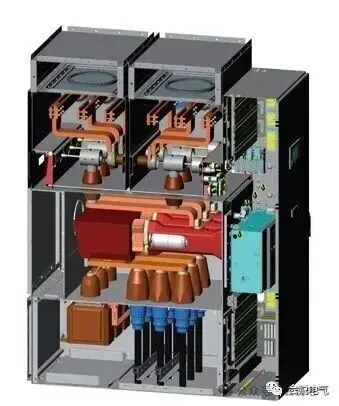
Circular busbars are widely used in environmentally friendly gas insulated switchgear, with uniform electric field strength and small phase spacing, which can also meet insulation requirements. For high current switchgear, the same effect is excellent. The advantage of circular tube busbars is that they generate less self heating when carrying the same current, due to the smaller impact of AC electromagnetic waves and higher utilization of conductors. At the same time, both the inside and outside of the tubular busbar can serve as heat dissipation channels, with a large heat dissipation area. The pressure difference formed by the high and low arrangement can effectively achieve the circulation of cold and heat.
Tube type busbars are safer, using copper tubes with a diameter of 100mm and a wall thickness of 10mm can meet the temperature rise requirements of 4000A current in air. In enclosed spaces, it is necessary to increase the wall thickness to reduce self heating.
The larger the diameter of the tubular busbar, the larger the required bending radius, which is not conducive to the compact layout of gas insulated switchgear. At this point, it is necessary to change the original single component connection mode. Through system design layout, the positions of support points and functional connection points can be changed. In gas insulated switchgear, a tube type busbar with a diameter of 100mm and a wall thickness of 15mm can be used, with a bending radius of 180mm. Using two tube type busbars in parallel is also a good choice. If 4000A current is distributed to the two tube type busbars, a busbar with a diameter of 60mm and a wall thickness of 10mm can be used, and the bending radius can be reduced to 100mm.
Another design that needs to improve the utilization rate of tubular busbars is the integrated design, which reduces the number of connection joints. For switchgear, every connection, whether it is a fixed connection or a dynamic connection brought by moving contacts, will significantly increase resistance and cause local temperature rise.
ABB's medium voltage switchgear adopts a tubular busbar design, which eliminates contact resistance through the integrated molding process of tubular busbar and static contact, reducing energy consumption by more than 25%. A single device can save 28333 kWh of electricity throughout its entire life cycle. The heat dissipation area of its hollow conductor is 35% larger than that of a solid busbar, combining energy-saving and heat dissipation advantages.
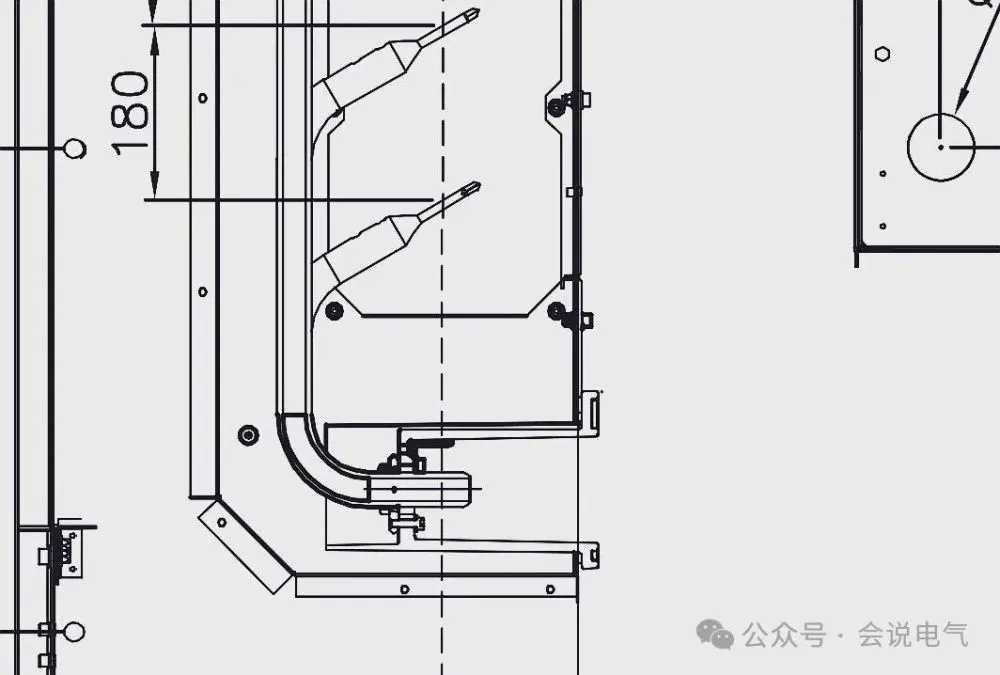
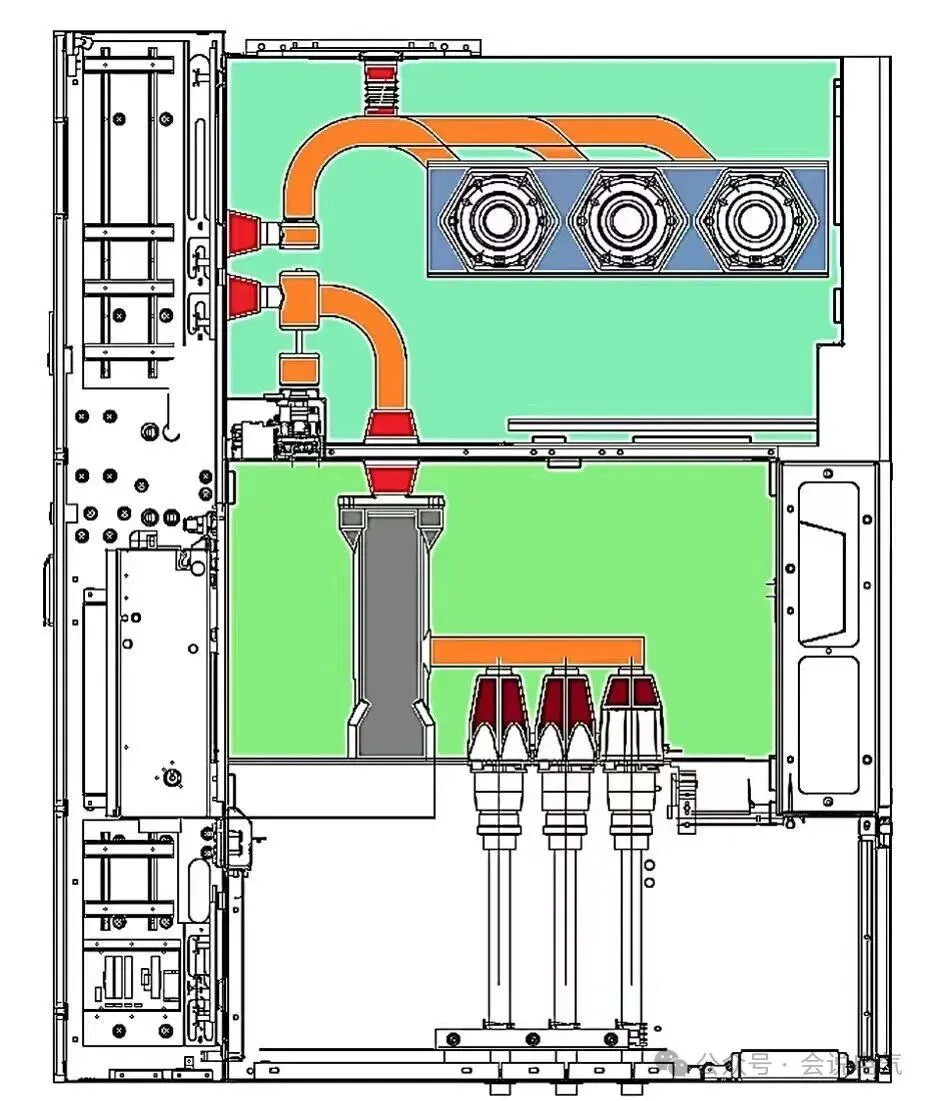
For gas insulated switchgear, there can be more integrated connections inside, such as the connection between the direct acting three position switch and the upper and lower branch busbars, the connection between the busbar and the circuit breaker pole, etc. The direct acting three position switch uses spring contact fingers and dynamic connections on the inner and outer surfaces of the circular tube.
The pole is vertically arranged, and the upper end of the arc extinguishing chamber and the three position switch also need to be integrated in design to reduce joints. An airflow channel is formed above and below the pole to reduce temperature rise.
Improving heat dissipation efficiency is also the key to solving temperature rise in high current switchgear. If multiple heat pipe expansion plates are used as heat conduction components to increase the heat conduction path, the heat transfer efficiency of the heat pipe effect is very high, which can reduce the temperature of the partition to a difference of 5 degrees from the external air temperature, that is, from 70 degrees to 40 degrees. At this point, the temperature difference between the busbar and the partition increases from 30 degrees Celsius to 60 degrees Celsius, and the thermal conductivity efficiency of radiation, convection, and insulation support is proportional to the temperature difference. A large temperature difference greatly improves the thermal efficiency of radiation and other factors, thereby reducing the temperature of the busbar.
Recently Posted
-
Single-Phase Transformer: Ultimate Buying Guide for Power Equipment Buyers (2026)
July 18, 2026Core Keywords: Single-phase transformer, single-phase power transformer, low voltage distribution transformer, residential & c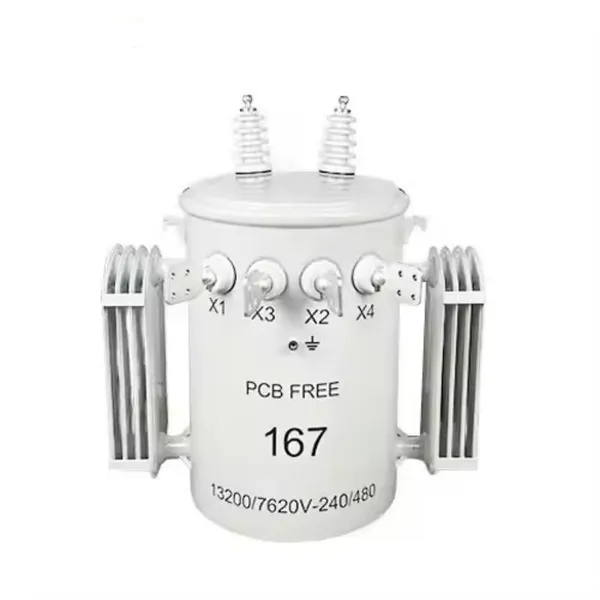 Read More
 -
High & Low Voltage Switchgear: 2026 Ultimate B2B Buying Guide for Power Equipment
July 18, 2026Core SEO & GEO Keywords: High and low voltage switchgear, HV LV switchgear, low voltage distribution switchgear, high voltage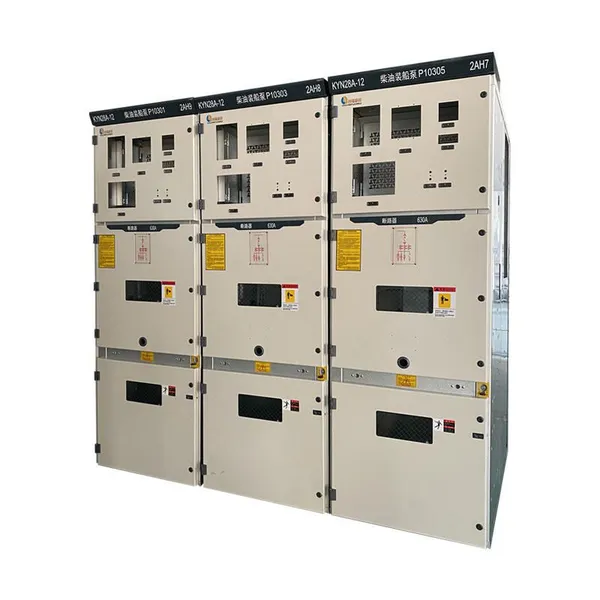 Read More
 -
Main Power Transformer: 2026 Ultimate B2B Buying Guide for Grid & Industrial Projects
July 18, 2026Core SEO & GEO Keywords: Main power transformer, power main transformer, high voltage power transformer, industrial main trans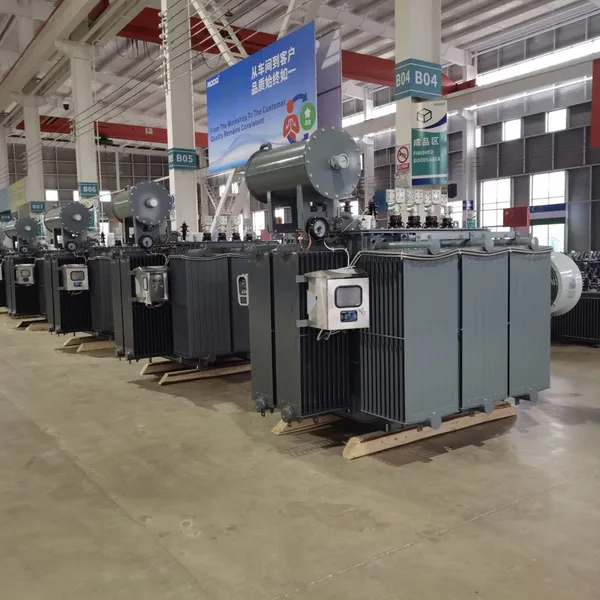 Read More
 -
Drop-Out Fuse & Pole Line Fittings: Complete Guide for Overhead Power Distribution Reliability
July 18, 2026Drop-Out Fuse & Pole Line Fittings: Complete Guide for Overhead Power Distribution ReliabilityPublished: July 15, 2026Core SEO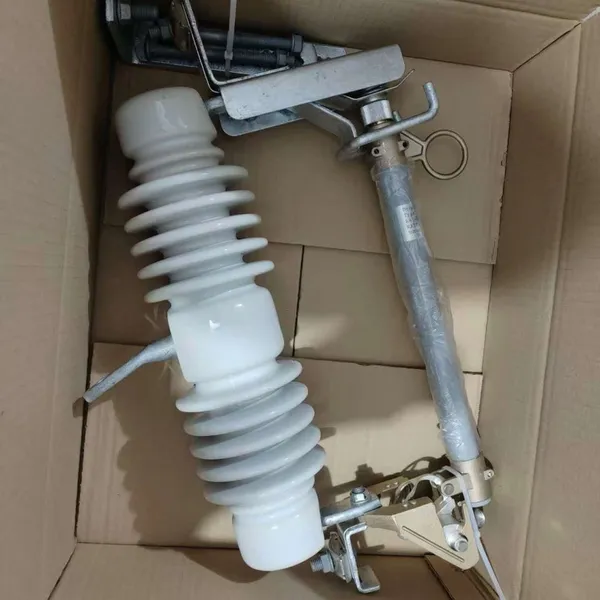 Read More

Contact Us
Recommended Products
-
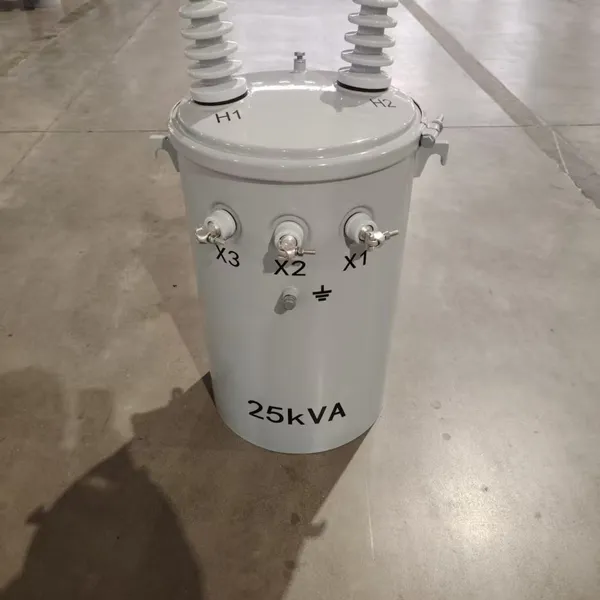
 Single Phase Oil Immersed Transformer 10KVA 15KVA 25KVA 37.5KVA Standard CompliantNegotiableMOQ: 2 Units
 -
Electrical Arc Furnace Transformers up to 120MVA - Certified for Steel Industry ApplicationsUS$ 8000 - 10000MOQ: 1 Unit
-
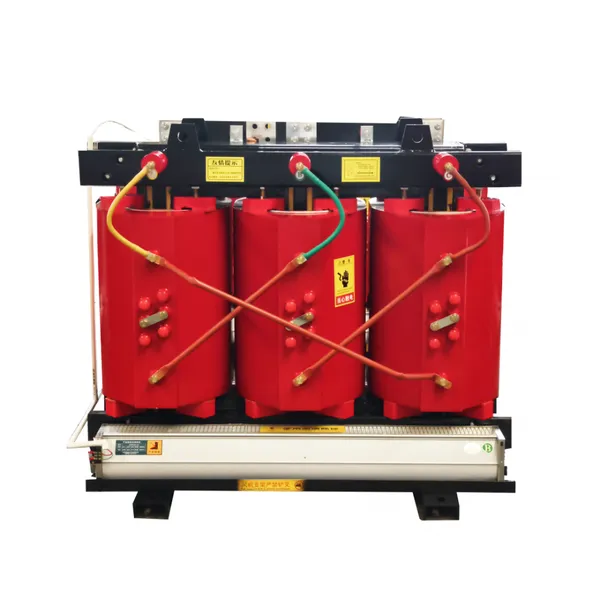
3-Phase Oil Type Transformer 5-Year Warranty With Load Test ReportUS$ 5428 - 5628MOQ: 1 Unit
-
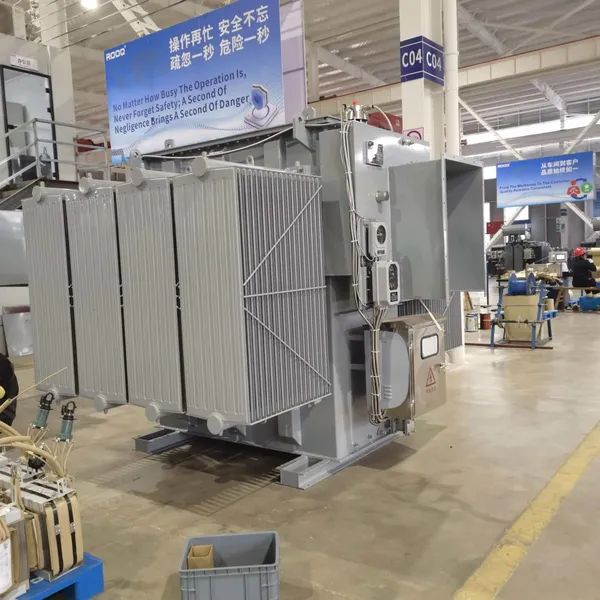
Three Phase Oil Filled Transformer for Mining Operations Dust-Proof DesignUS$ 5428 - 5628MOQ: 1 Unit
-
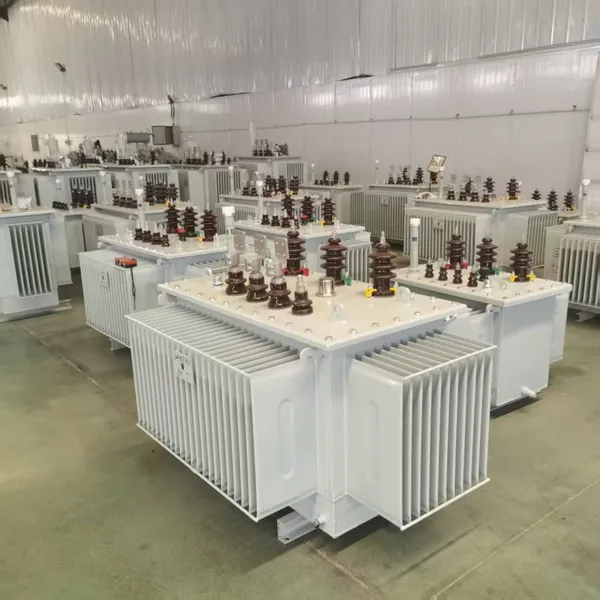
HV Three Phase Oil Filled Transformer With ONAN Cooling 500kVA-2500kVAUS$ 5428 - 5628MOQ: 1 Unit
-
11/24/33KV High Voltage Isolation Switch With Mill Test ReportUS$ 800MOQ: 1 Unit
-
3-Pole Outdoor Isolation Switch With 5-Year Warranty and Compliance TestingUS$ 800MOQ: 1 Unit
-
YH5WZ 3KV-110KV Zinc Oxide Arrester for Power Station Outdoor High Voltage DistributionUS$ 21MOQ: 100 Units
-
Outdoor SF6 Load Break Switch LW30-72.5/1250A 24KV 630A 16KA Three PhaseUS$ 10000MOQ: 1 Unit
-
Input Line Reactor for CNC Machine Frequency Converters, 400V 60HzUS$ 65MOQ: 5 Units
-
Industrial Grade 35-220KV Oil-Immersed Current Transformer for SubstationsUS$ 480 - 500MOQ: 3 Units
-
LZZBJ9-20 Indoor 24kV High Voltage Cabinet Single-Phase 5-20 for Industrial Power SystemsUS$ 250MOQ: 3 Units
-
17.5 KV Full-enclosed Outdoor Epoxy Resin Casting and Double Pole Insulated Voltage TransformerUS$ 90 - 100MOQ: 1 Piece
-
Three Phase 30kVA SVC Voltage Regulator for Textile Manufacturing, Stable OutputUS$ 159MOQ: 10 Units
-
Amorphous Core 25kVA Transformer Compliant With IEC Standards for Power DistributionUS$ 1300 - 2900MOQ: 2 Units
-
CHINT NM8NDC-630 DC 1000V/Ui High-Voltage Circuit Breaker With 630A Frame CurrentUS$ 425 - 625MOQ: 100 Units
-
High Voltage Drop Out Fuse Cutout 33KV 27KV 24KV for Overhead LinesUS$ 35MOQ: 100 Units
-
TVR-10 KVA Automatic Voltage Stabilizer 220V ±0.5% Accuracy for Laboratory InstrumentsUS$ 103 - 123MOQ: 1 Unit
-
Universal 5000VA Voltage Transformer for International Appliances 110V-220VUS$ 102 - 107MOQ: 10 Units
-
500kV Three-Phase Oil-Immersed Auto Transformer 250MVA for Power GridsUS$ 800 - 9000MOQ: 1 Unit