
 Business License

Testing of North American Gas filled Cabinets
With the increasing demand for high-capacity electricity in data centers, more and more customers are choosing compact gas insulated switchgear as high-voltage side equipment. Therefore, the demand for American standard CGIS is high, and the switchgear needs to comply with the IEEE C37.20.9 North American gas filled cabinet standard.
For switchgear that meets the IEEE C37.20.9 standard, the main difficulties in type testing include insulation material testing, circuit breaker testing, internal arc testing, and UL certification compliance of components.
For circuit breakers, unlike those used in air insulated switchgear, there are North American certified brand circuit breakers that can be selected, while the circuit breakers for gas filled cabinets are customized according to their own products. Similarly, for voltage transformers and current transformers, those used in air insulated switchgear certified in North America cannot be used in gas filled cabinets. Therefore, a more effective approach is to obtain North American certification for the entire charging cabinet and its supporting circuit breakers, transformers, etc
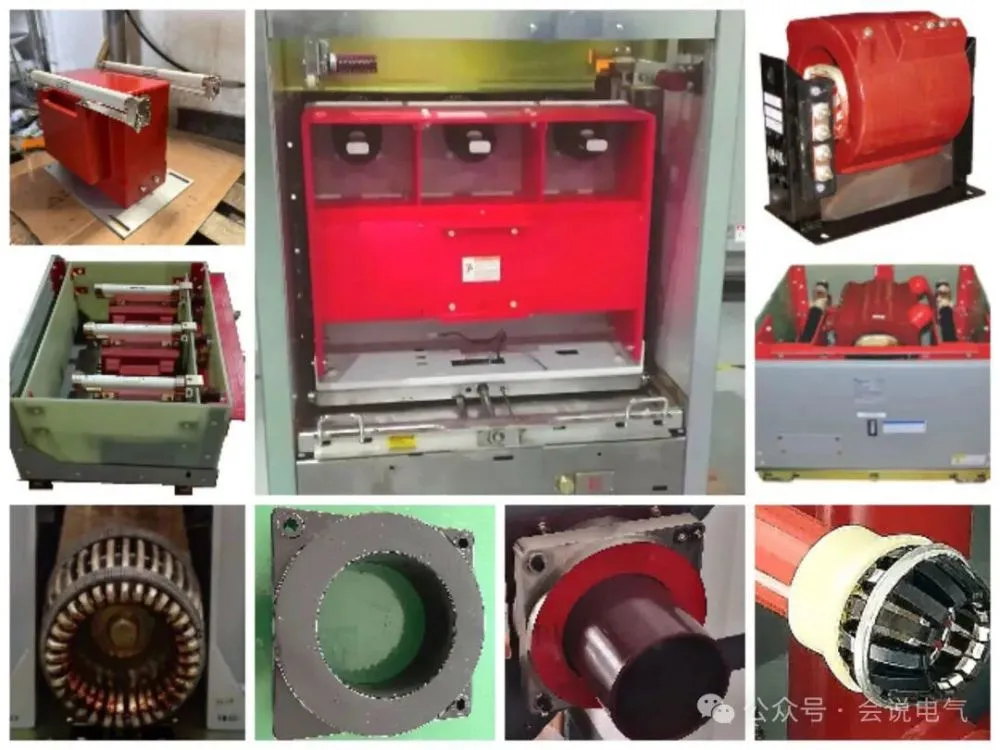
Type test verification of North American gas insulated switchgear:
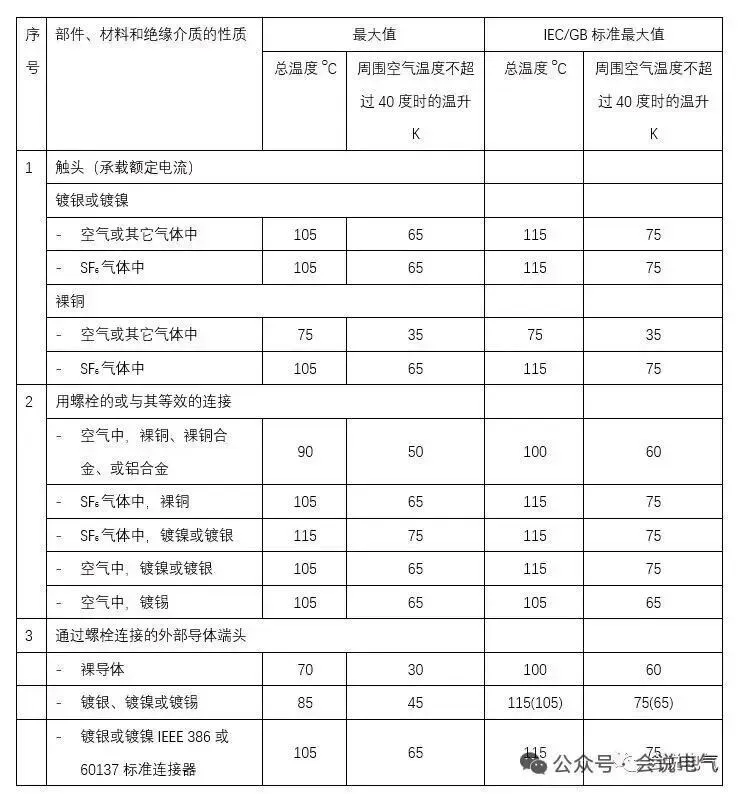
1) The testing of IEEE gas insulated switchgear is similar to the GB standard testing, except that the insulation withstand voltage value is tested according to the requirements of Table 1, the temperature rise limit value is tested according to the requirements of Table 2, and the short-time withstand current is tested according to the values specified in Table 3.
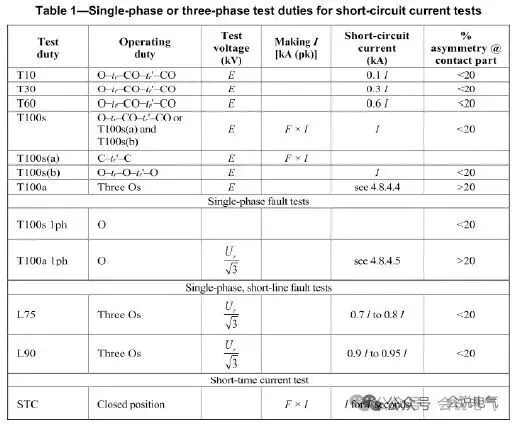
2) Circuit breakers shall be tested in accordance with IEEE C37.04, IEEE C37.06, and IEEE C37.09 standards. The circuit breaker needs to be tested according to the North American standard electrical parameters of 38kV 60Hz. Not completely equivalent to GB/IEC standards, C37.04 requires some single-phase tests, L75/L90 tests, etc. The general electrical lifespan does not need to be 10000 times according to the E2 standard, as long as it meets the basic breaking test requirements.
3) The isolation switch is tested according to the IEEE C37.20.4 standard. Current transformers and voltage transformers need to pass type tests according to IEEE C57.13.
4) The insulation materials used for sleeves, poles, etc. need to meet the following test requirements. There are two types of insulation materials defined in IEEE C37.20.9, namely solid sealed insulation materials and non solid sealed insulation materials; For insulation materials used for sealing primary power components and providing isolation and/or support, flame retardant and trace resistance tests are required when the material is exposed to air or other oxidizing gases. The flame retardant rating must meet at least UL94 and 94-HB, and the trace resistance test requires placing the material in gas for testing. For materials that are not exposed to oxidation reaction gases, flame retardant and scratch resistance tests are not required.
6.2.7.1 Flame retardant testing - ASTM D229 method II
1. The size of the combustion test sample is 13 ± 0.8mm square cross-section, with a length of 254 ± 1.6mm;
2. Five samples were used in the experiment, and the average start time of combustion was taken;
3. The test temperature is 860 ± 5OC, adjust the resistance wire current to maintain the temperature at ± 5OC;
Judgment criteria: The minimum average ignition time is 60s, and the maximum average combustion time is 500s
6.2.7.2 Tracking Resistance Test - According to the American standard IEEE C37.20.2 Metal Armored Switchgear Standard 6.2.7.2 Tracking Resistance Test, the test results should meet the requirements of ASTM D2303 under condition A,
Switchgear components with a rated maximum voltage of 4.76 kV and below. A sample with a material thickness of 6.4 millimeters (0.25 inches) is subjected to 2500 V, and the time for the voltage to reach the mark of 25 millimeters (1 inch) is ≥ 20 minutes.
Switchgear components with a rated maximum voltage of 8.25 kV and higher. The sample with a material thickness of 6.4 millimeters (0.25 inches) is subjected to a voltage of 2500V, and the time for the electric trace to reach the mark of 25 millimeters (1 inch) is ≥ 300 minutes.
5) The internal arc fault test is different from the IEC and GB standards.
The internal arc of IEEE gas insulated switchgear needs to be tested according to IEEE C37.20.7. IEEE defines two types of product accessibility based on internal arc: Type 1 and Type 2.
Type 1- Switchgear with anti internal arc design or function that is only freely accessible at the front of the device, similar to GB standard IAC AF level.
Type 2- Switchgear with arc resistant design or function only on the freely accessible exterior (front, back, and side) of the device, similar to the GB standard IAC AFLR rating.
IAC classification name:
a) For Type 1A or 2A, basic internal arc testing; For Type 1B or 2B, an additional set of tests is required to enable users to open the doors of compartments identified as low voltage controls or instruments, meaning that the internal arc test is conducted with the instrument doors open;
b) For 1C or 2C type, each compartment is arc resistant, and the impact of internal arc faults is limited to the compartment where the fault occurs, which means that the internal arc compartment will not affect other normal functional compartments.
Some differences between IEEE standard internal arc testing and GB standard are:
a) GB standard authorizes personnel to have Class A accessibility, with a distance of 300 mm between the cotton cloth indicator and the equipment casing. The distance defined in C37.20.7 standard is 100 mm, which is the same as the general public's Class B accessibility in GB standard;
b) The ANSI/IEEE standard arc duration is generally 0.5s, while the GB standard is generally 0.5s or 1s.
For gas requirements:
Manufacturers should provide necessary instructions to users to update the gas and maintain its required quantity and quality. For switchgear using sulfur hexafluoride (SF6) as an insulating gas. SF6 gas shall comply with the provisions of ASTM D2472 or IEC 60376, and reused SF6 gas shall comply with the provisions of IEC 60480. For switchgear with SF6 and mixtures, refer to IEC 62271-4.
In order to prevent condensation, the maximum allowable moisture content of the gas in the inflation switch equipment with rated inflation density should ensure that the dew point does not exceed -5 ° C during the service life.
When the equipment operates within the specified temperature range, its insulation performance should not decrease. Safety Data Sheets (SDS) should be provided for all gases and gas mixtures used in MEGIS equipment, and SDS must be provided randomly. The weight of gas contained within each vertical unit or switchgear assembly should be recorded and displayed on the nameplate. The weight displayed on the nameplate should be the weight of the gas contained at 20 ° C and rated filling pressure. The weight should be verified during the production process and should be accurate to within 1%.
For refillable gas compartments, the leakage rate from any individual gas compartment to the atmosphere shall not exceed 0.5% per year. The maximum gas leakage rate for non refillable sealed inflatable compartments should be 0.1% per year. The maximum gas leakage rate of the vertical section of the inflatable compartment should be 0.5% per year.
Conclusion
The technology and manufacturing level of domestic gas insulated switchgear products are already very mature, with product quality and stability. Although the IEEE C37.20.9 gas insulated switchgear standard mostly adopts the requirements of IEC62271-200 standard, the requirements for product safety vary due to different parameters such as voltage and current. Therefore, domestic gas insulated switchgear components such as current and voltage transformers need to comply with corresponding American standards, improve products according to American material requirements, meet gas parameters requirements, and complete tests according to American standards in order to meet the requirements of the North American market.
Recently Posted
-
IEC 17.5kV Circuit Breaker Test
September 3, 2026IEC standards and GB standards are relatively close, with the vast majority of parameters requiring GB standards to be equivalent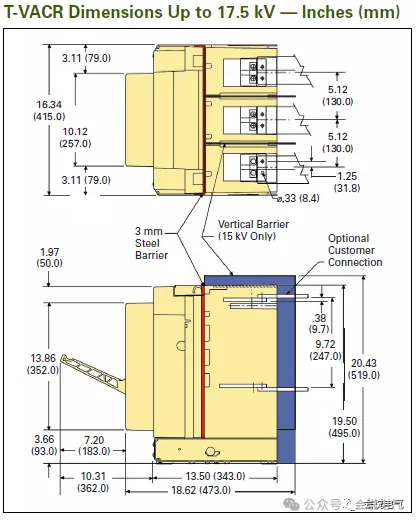 Read More
 -
The relationship between busbar shape, current carrying capacity, and heat generation
September 2, 2026Principles for selecting busbar specifications for low-voltage switchgear1) Due to the low insulation voltage, the clear distance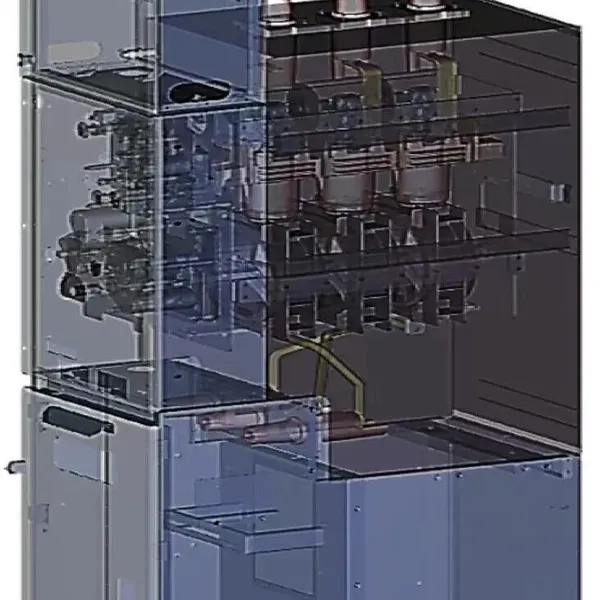 Read More
 -
Design of American standard medium voltage switchgear
September 2, 2026Product development requires a solid and serious approach. Firstly, the customer's demand is for authentic American standard a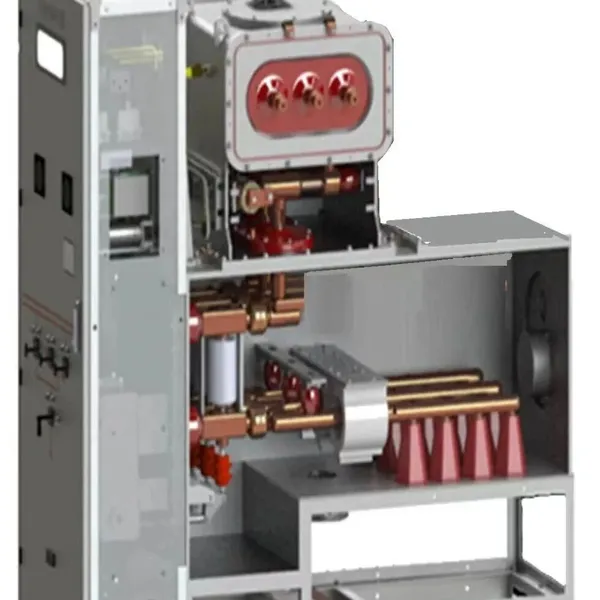 Read More
 -
Jinhua Dika Electrical Equipment: Manufacturing Transformers and Switchgear in Zhejiang, China
August 31, 2026When a buyer starts looking for a transformer or a complete switchgear set, the hardest part is often not the specification. It is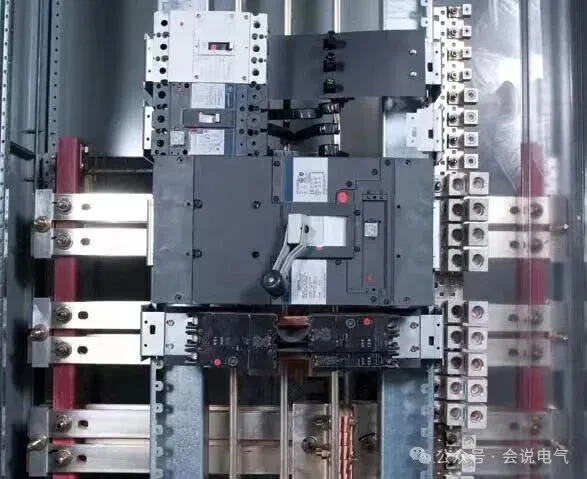 Read More

Contact Us
Recommended Products
-
 Single Phase Oil Immersed Transformer 10KVA 15KVA 25KVA 37.5KVA Standard CompliantNegotiableMOQ: 2 Units
 -
Electrical Arc Furnace Transformers up to 120MVA - Certified for Steel Industry ApplicationsUS$ 8000 - 10000MOQ: 1 Unit
-
3-Phase Oil Type Transformer 5-Year Warranty With Load Test ReportUS$ 5428 - 5628MOQ: 1 Unit
-
Three Phase Oil Filled Transformer for Mining Operations Dust-Proof DesignUS$ 5428 - 5628MOQ: 1 Unit
-
HV Three Phase Oil Filled Transformer With ONAN Cooling 500kVA-2500kVAUS$ 5428 - 5628MOQ: 1 Unit
-
11/24/33KV High Voltage Isolation Switch With Mill Test ReportUS$ 800MOQ: 1 Unit
-
3-Pole Outdoor Isolation Switch With 5-Year Warranty and Compliance TestingUS$ 800MOQ: 1 Unit
-
YH5WZ 3KV-110KV Zinc Oxide Arrester for Power Station Outdoor High Voltage DistributionUS$ 21MOQ: 100 Units
-
Outdoor SF6 Load Break Switch LW30-72.5/1250A 24KV 630A 16KA Three PhaseUS$ 10000MOQ: 1 Unit
-
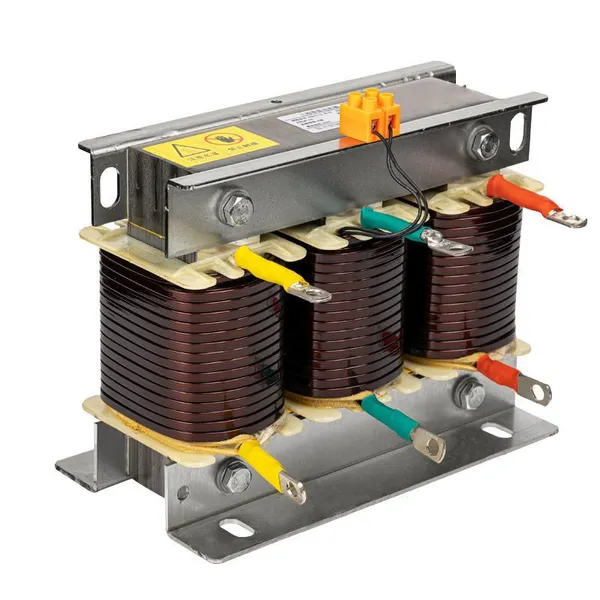
Input Line Reactor for CNC Machine Frequency Converters, 400V 60HzUS$ 65MOQ: 5 Units
-
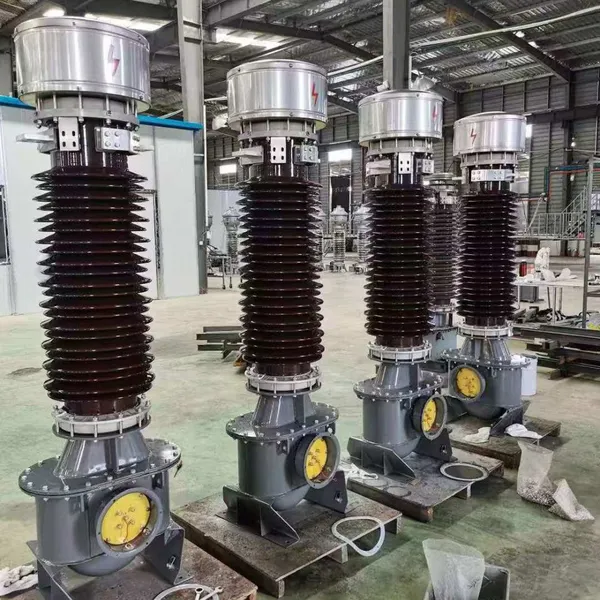
Industrial Grade 35-220KV Oil-Immersed Current Transformer for SubstationsUS$ 480 - 500MOQ: 3 Units
-
LZZBJ9-20 Indoor 24kV High Voltage Cabinet Single-Phase 5-20 for Industrial Power SystemsUS$ 250MOQ: 3 Units
-
17.5 KV Full-enclosed Outdoor Epoxy Resin Casting and Double Pole Insulated Voltage TransformerUS$ 90 - 100MOQ: 1 Piece
-
Three Phase 30kVA SVC Voltage Regulator for Textile Manufacturing, Stable OutputUS$ 159MOQ: 10 Units
-
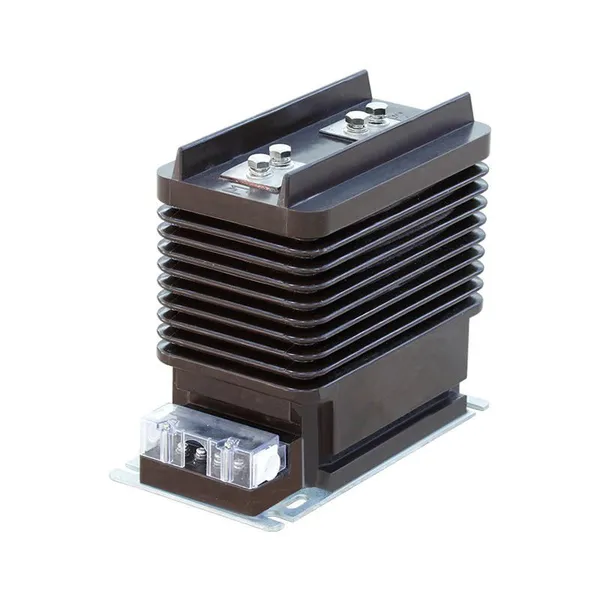
Amorphous Core 25kVA Transformer Compliant With IEC Standards for Power DistributionUS$ 1300 - 2900MOQ: 2 Units
-
CHINT NM8NDC-630 DC 1000V/Ui High-Voltage Circuit Breaker With 630A Frame CurrentUS$ 425 - 625MOQ: 100 Units
-
High Voltage Drop Out Fuse Cutout 33KV 27KV 24KV for Overhead LinesUS$ 35MOQ: 100 Units
-
TVR-10 KVA Automatic Voltage Stabilizer 220V ±0.5% Accuracy for Laboratory InstrumentsUS$ 103 - 123MOQ: 1 Unit
-
Universal 5000VA Voltage Transformer for International Appliances 110V-220VUS$ 102 - 107MOQ: 10 Units
-
500kV Three-Phase Oil-Immersed Auto Transformer 250MVA for Power GridsUS$ 800 - 9000MOQ: 1 Unit