
 Business License

Oil-Immersed Transformers for Solar PV Power Plants
A solar developer once watched a new plant lose several weeks of generation because the transformer feeding the grid connection failed its commissioning test. The unit had been specified for a steady industrial load, but a solar plant does not behave like a factory, and the mismatch only surfaced when the project was already against its deadline.
Solar farms place unusual demands on their transformers, and equipment that works elsewhere can fail early when those demands are ignored. The good news is that these demands are well understood, and the right transformer choice is largely a matter of knowing what to ask for.
This guide explains why solar plants need transformers, what makes their duty cycle unusual, and how to specify an oil-immersed unit that will run reliably for the life of the project.
1. Why Solar Plants Need Transformers at All
Solar panels produce direct current at low voltage, but the grid runs on alternating current at much higher voltage. Converting and delivering that power requires a chain of equipment, and transformers are the link that matches the voltage at each stage to the voltage of the next.
In a large utility-scale plant, the inverter converts DC to AC at a few hundred volts, and then one or more transformers step that voltage up to the medium-voltage level of the collection network, often 11 kV, 20 kV, or 33 kV. From there, a further step-up transformer raises it to the transmission voltage for export.
Every one of those voltage changes happens in a transformer, which means a single solar site can contain dozens of units, from small inverter transformers to large grid-interface units. Getting them right is not a minor detail; it is central to how much energy the plant actually delivers.
Utility-scale solar has grown from single-digit megawatt projects to sites measured in the hundreds of megawatts, and the electrical infrastructure has scaled with it. A 100 MW plant can contain dozens of transformer units spread across hundreds of hectares, all feeding a common collection network.
2. The Role of the Inverter Transformer
The inverter transformer sits directly between the inverter and the collection grid. Its job is to take the inverter's low-voltage AC output and raise it to the medium-voltage level that the plant's cabling can carry efficiently over distance.
These units are often built as compact substations, sometimes called pad-mounted transformers or box transformers, that combine the transformer, the medium-voltage switchgear, and the low-voltage connections inside a single weatherproof enclosure. This integrated design keeps the footprint small and speeds up installation in the field.
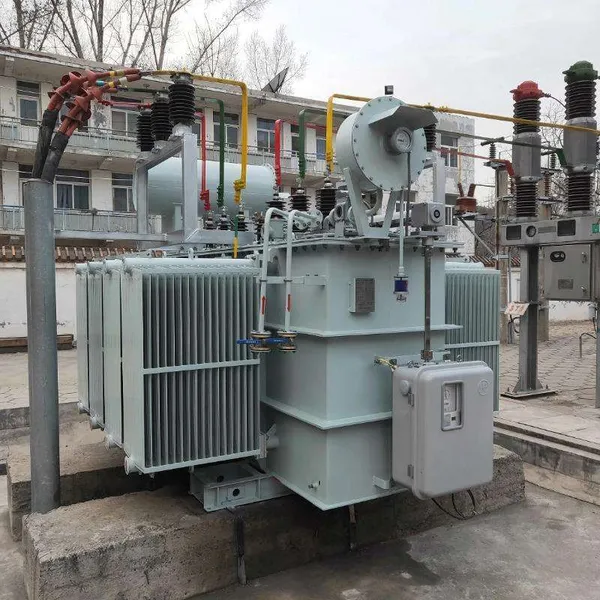
Inverter transformers are usually oil-immersed for outdoor plants because oil cooling tolerates the high ambient temperatures and the fluctuating load that characterize solar generation. The oil-immersed design also keeps the first cost down, which matters when a site needs many units.
A typical box transformer for solar might be rated between 2.5 MVA and 5 MVA, pairing one or more inverters to a single unit. Inside the enclosure, the medium-voltage side usually includes a load-break switch and fuse protection, so the unit can be isolated and protected without a separate switchgear building.
3. Step-Up Transformers in Solar Farms
Large solar farms add a second stage. After the collection network gathers power from many inverters at medium voltage, a step-up transformer raises it once more to the transmission voltage, typically 110 kV or higher, for delivery to the grid operator.
This grid-interface transformer is a much larger machine than the inverter units, often rated in the tens of megavolt-amperes, and it is nearly always oil-immersed. At this scale, oil is the only practical way to remove the heat produced by continuous full-load operation.
The step-up transformer also carries a heavier regulatory burden, because it is the point where the plant's power quality and protection settings meet the grid's requirements. Its specification is usually written in close cooperation with the utility or the grid operator.
The step-up transformer is also specified for a specific short-circuit impedance, typically in the range of 10% to 14%, which limits fault current and coordinates with the grid's protection scheme. Getting this value wrong can ripple through the whole plant's protection settings.
4. Oil-Immersed vs Dry-Type for Solar
For outdoor utility-scale solar, oil-immersed transformers are the default choice, and the reasons are practical rather than historical. Outdoor plants rarely have the fire-sensitivity constraints of an occupied building, so the safety advantage of dry-type equipment carries little weight.
Oil cooling also handles the two hardest parts of the solar duty cycle better than air. When the plant runs at full output around midday, the oil carries heat away efficiently, and when the load drops to near zero at night, the thermal mass of the oil smooths out the temperature swing.
Dry-type transformers do appear in rooftop and building-integrated solar, where the equipment sits close to occupied space and fire safety dominates. For the open-field, megawatt-scale projects that make up most of the market, oil-immersed remains the economical and durable choice.
Another point in favor of oil for solar is overload tolerance. A solar plant occasionally sees short bursts above nominal output, such as during cloud-edge brightening, and an oil-immersed unit absorbs these brief peaks more gracefully than a dry-type unit of the same rating.
5. Key Specifications for Solar Transformers
Specifying a solar transformer is different from specifying a general industrial unit. The table below lists the parameters that matter most and what a solar project typically needs to confirm.
| Parameter | Typical Solar Requirement | Why It Matters |
|---|---|---|
| Rated power | Matched to inverter cluster, e.g. 2.5–5 MVA per block | Avoids underloading and overloading |
| Voltage ratio | 0.4/0.8 kV to 11/20/33 kV | Matches inverter and collector voltage |
| Duty cycle | Continuous full load by day, idle at night | Drives thermal and loss design |
| Ambient temperature | Often 40–50°C in desert sites | Affects derating and cooling |
| Harmonic tolerance | Inverter harmonics, roughly up to a few percent | Prevents extra heating |
| Insulation level | Per IEC 60076 for the voltage class | Confirms grid compatibility |
The ambient temperature line is often underestimated. A transformer rated at 40°C ambient will run hotter on a 50°C desert afternoon, and the plant must either derate the unit or specify a higher temperature class from the start.
The vector group is another detail worth confirming early. Many solar inverters require a Dyn11 or similar connection, and a mismatch between the transformer's vector group and the inverter's control assumptions can prevent the plant from synchronizing correctly.
6. Environmental and Thermal Challenges
Solar plants are built where the sun is strongest, which usually means heat, dust, and often high altitude. All three stress a transformer in ways that a temperate industrial site never does.
High ambient temperature reduces the amount of heat the unit can shed, so a cooling design that works in a mild climate may be inadequate in a desert. Dust clogs radiators and reduces their effectiveness, while high altitude thins the air and degrades both cooling and the dielectric strength of air gaps.
A well-specified solar transformer accounts for these factors at the quoting stage. That can mean larger cooling surfaces, sealed enclosures against dust ingress, and altitude-corrected clearances, all of which are cheaper to build in than to retrofit after commissioning.
Enclosure protection is part of the same conversation. A desert transformer benefits from a sealed enclosure with a high ingress-protection rating to keep sand out of the terminals and radiators, while a humid coastal site needs attention to corrosion resistance instead.
Monitoring is the final piece. Many solar transformers now ship with temperature sensors and, for oil units, gas-detection relays that connect to the plant's SCADA system, so an operator sees a developing problem long before it becomes an outage.
7. Transformer Losses and Solar ROI
Losses matter more in solar than in almost any other application, because every watt lost in a transformer is a watt the plant paid to generate but never sells. Over a 25-year project life, even a fraction of a percent of extra loss compounds into real money.
No-load loss is especially important in solar, because the transformers sit energized overnight even though they deliver almost no power. A transformer with high no-load loss bleeds energy for thousands of idle hours every year, which is why solar specifications often cap no-load loss far more tightly than an industrial buyer would.
This is also why the purchase decision should use total cost of ownership, not sticker price. A slightly more expensive transformer with lower losses can pay for itself many times over within the operating life of a plant.
Put in levelized terms, the difference between a 98% and a 99% efficient transformer on a multi-megawatt plant can amount to tens of thousands of dollars in lost revenue over the project life. That is why serious solar developers treat the transformer as an asset to optimize, not a commodity to buy on price alone.
8. A Manufacturer's Perspective on Solar Projects
Most solar transformer problems we see are specification problems, not manufacturing defects. A unit that is correctly specified for the site's temperature, altitude, and duty cycle rarely gives trouble, while one that was ordered from a generic template often does.
Jinhua Dika Electrical Equipment Co., Ltd. manufactures oil-immersed transformers and complete substations for solar and other power projects from its facility in Jinhua, Zhejiang Province. Dika Electrical works through the duty cycle with each buyer before quoting, confirming the inverter voltage, the collector voltage, and the site's worst-case ambient conditions.
One project we supplied involved a desert site with afternoon temperatures above 45°C. The transformers were built with enlarged cooling surfaces and a higher temperature class, and they have run through several summers without a thermal shutdown. A second, smaller rooftop installation used dry-type units where the equipment sat close to an occupied building, and the fire-safe design was the deciding factor there.
For a buyer, the lesson is simple: a solar transformer is a project-specific machine, and the conversation with the manufacturer should reflect that rather than starting from a standard catalog listing.
Buyers should also plan for commissioning. A solar transformer is usually tested at the factory, then again after transport, because a unit that travels thousands of kilometers by road and sea can shift internally. Confirming the post-delivery test plan up front avoids surprises at the connection deadline.
9. FAQ
9.1 Why do solar plants use oil-immersed transformers instead of dry-type?
Outdoor utility-scale solar plants favor oil-immersed transformers because oil cooling handles high ambient temperatures and the full-load-by-day, idle-by-night duty cycle better than air, and because the first cost is lower when a site needs many units. Fire safety, the main reason to choose dry-type, is less of a constraint in an open field away from occupied buildings. Dry-type units still appear in rooftop and building-integrated solar where fire safety dominates.
9.2 What is a solar transformer's duty cycle like?
A solar transformer follows the sun rather than a factory schedule. It runs at or near full load during the middle of the day, drops off through the late afternoon, and sits energized but nearly unloaded overnight. This pattern makes no-load loss unusually important, because the unit spends thousands of idle hours each year still consuming a small amount of power through its core.
9.3 How does altitude affect a solar transformer?
At high altitude the air is thinner, which reduces both cooling and the dielectric strength of air gaps. A transformer designed for sea level may overheat or fail insulation coordination above roughly 1,000 meters unless it is derated or specified with altitude-corrected clearances. Confirming the site elevation at the quoting stage is essential for plants built in mountain or plateau regions.
9.4 Why is no-load loss so important for solar projects?
No-load loss flows through the transformer core whenever it is energized, whether or not it is delivering power. Because solar transformers sit energized overnight with almost no load, that constant loss accumulates for thousands of hours every year over a 25-year project life. Tight no-load loss limits therefore protect the plant's revenue far more than an equivalent saving on an industrial transformer that runs at steady load.
Recently Posted
-
Transformer Factory Tests: Routine, Type and Special Tests Explained
August 28, 2026An importer once accepted a transformer shipment without reading the test report, only to find the unit failed on site because its Read More
 -
UL891 distribution panel
August 28, 2026Switchgear and separately separated distribution panels require a rear channel for connecting incoming and outgoing feeder cables.
Read More -
Dry-Type vs Oil-Immersed Transformer: How to Choose
August 26, 2026A facilities engineer once had to shut down a hospital wing because the transformer serving it leaked oil onto the floor below. Th Read More
 -
Foreign project - FAT factory undergoing testing
August 26, 2026For FAT Factory Acceptance Test, as a part of the ISO file system, the factory test documents are generally conducted according to Read More

Contact Us
Recommended Products
-
 Single Phase Oil Immersed Transformer 10KVA 15KVA 25KVA 37.5KVA Standard CompliantNegotiableMOQ: 2 Units
 -
Electrical Arc Furnace Transformers up to 120MVA - Certified for Steel Industry ApplicationsUS$ 8000 - 10000MOQ: 1 Unit
-
3-Phase Oil Type Transformer 5-Year Warranty With Load Test ReportUS$ 5428 - 5628MOQ: 1 Unit
-
Three Phase Oil Filled Transformer for Mining Operations Dust-Proof DesignUS$ 5428 - 5628MOQ: 1 Unit
-
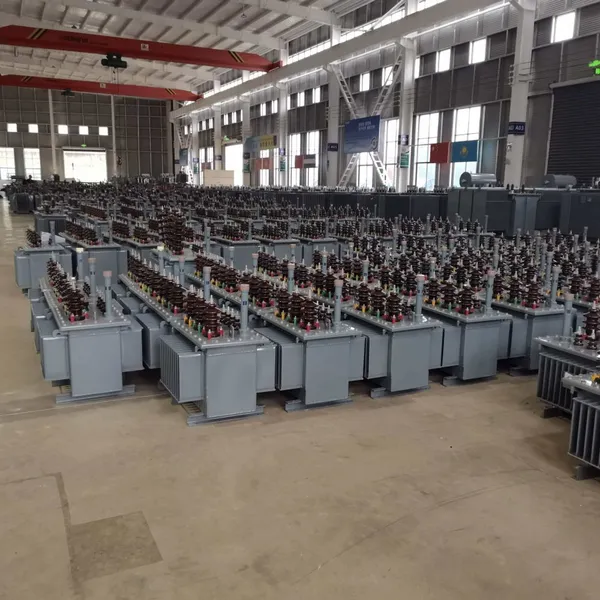
HV Three Phase Oil Filled Transformer With ONAN Cooling 500kVA-2500kVAUS$ 5428 - 5628MOQ: 1 Unit
-
11/24/33KV High Voltage Isolation Switch With Mill Test ReportUS$ 800MOQ: 1 Unit
-
3-Pole Outdoor Isolation Switch With 5-Year Warranty and Compliance TestingUS$ 800MOQ: 1 Unit
-
YH5WZ 3KV-110KV Zinc Oxide Arrester for Power Station Outdoor High Voltage DistributionUS$ 21MOQ: 100 Units
-
Outdoor SF6 Load Break Switch LW30-72.5/1250A 24KV 630A 16KA Three PhaseUS$ 10000MOQ: 1 Unit
-
Input Line Reactor for CNC Machine Frequency Converters, 400V 60HzUS$ 65MOQ: 5 Units
-
Industrial Grade 35-220KV Oil-Immersed Current Transformer for SubstationsUS$ 480 - 500MOQ: 3 Units
-
LZZBJ9-20 Indoor 24kV High Voltage Cabinet Single-Phase 5-20 for Industrial Power SystemsUS$ 250MOQ: 3 Units
-
17.5 KV Full-enclosed Outdoor Epoxy Resin Casting and Double Pole Insulated Voltage TransformerUS$ 90 - 100MOQ: 1 Piece
-
Three Phase 30kVA SVC Voltage Regulator for Textile Manufacturing, Stable OutputUS$ 159MOQ: 10 Units
-
Amorphous Core 25kVA Transformer Compliant With IEC Standards for Power DistributionUS$ 1300 - 2900MOQ: 2 Units
-
CHINT NM8NDC-630 DC 1000V/Ui High-Voltage Circuit Breaker With 630A Frame CurrentUS$ 425 - 625MOQ: 100 Units
-
High Voltage Drop Out Fuse Cutout 33KV 27KV 24KV for Overhead LinesUS$ 35MOQ: 100 Units
-
TVR-10 KVA Automatic Voltage Stabilizer 220V ±0.5% Accuracy for Laboratory InstrumentsUS$ 103 - 123MOQ: 1 Unit
-
Universal 5000VA Voltage Transformer for International Appliances 110V-220VUS$ 102 - 107MOQ: 10 Units
-
500kV Three-Phase Oil-Immersed Auto Transformer 250MVA for Power GridsUS$ 800 - 9000MOQ: 1 Unit