
 Business License

The difference between Chinese made 40.5kV switchgear and North American 38kV switchgear
Chinese made 40.5kV switchgear, with a power frequency withstand voltage of 95kV, lightning impulse withstand voltage of 185kV, and a current of 1250/2500/3150A of 31.5kA. American standard 38kV, power frequency withstand voltage 80kV, lightning impulse withstand voltage 150kV, current 1200/2000/3000A 31.5/40kA.
KYN61-40.5kV BIL 185kV, Width 1400mm. The floor standing circuit breaker is connected to the busbar and circuit through a contact box, and the epoxy pillar type multi winding current transformer is installed on the circuit breaker circuit side. The grounding switch is installed on the outgoing cable side.
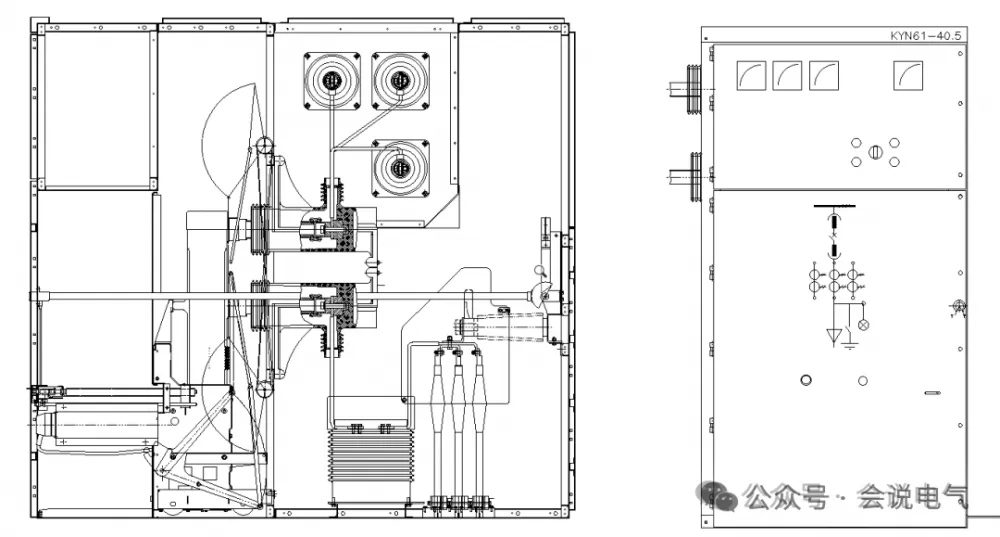
The 38kV switchgear in North America is mainly single-layer, similar to KYN61. There are also double-layer structures of circuit breakers and voltage transformers. The miniaturized 38kV vacuum circuit breaker can meet the double-layer structure, most of which are floor standing structures, with widths of 42 inches 1066mm (150kV lightning impulse withstand voltage BIL), 48 inches 1219mm (170kV BIL), and 60 inches 1524mm (200kV BIL).
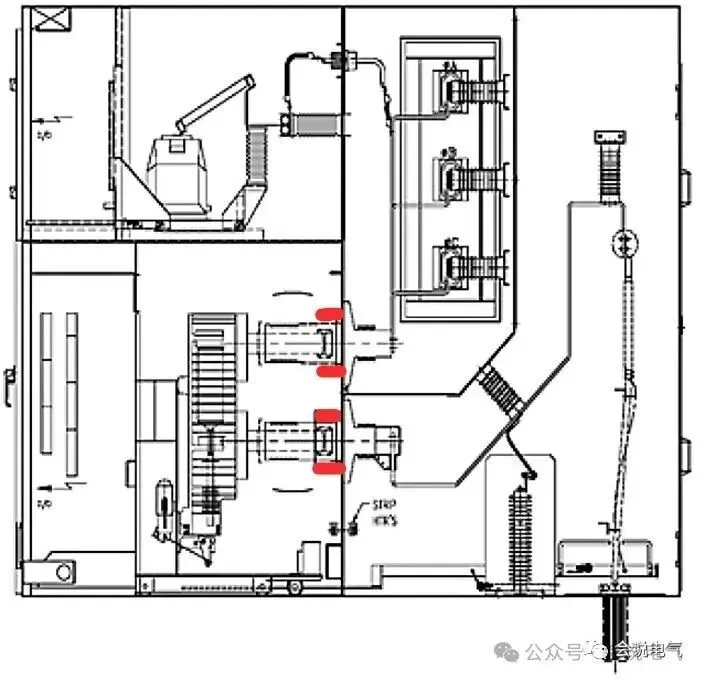
The current transformer is installed on the primary contact box in the handcart room in front of the cabinet for easy maintenance and replacement. Two CTs can be installed on each phase's upper and lower contact boxes, and a total of four CTs can be installed on each phase. This is different from cabinet 61, which uses epoxy pillar type current transformers installed in the cable room.
The following figure shows the contact box of the American standard 38kV switchgear. The low-voltage through type current transformer is installed in the handcart room at the front of the contact box. This type of bushing can only meet the requirements of insulation and small diameter by adopting a capacitive equipotential shielding design. The current transformer has a power frequency withstand voltage of 3kV, impulse withstand voltage of 10kV, and an inner diameter of only 190mm, which cannot meet the requirements of 80kV insulation withstand voltage. Through grounding shielding, the functional requirements are achieved, the insulation performance is met, the size is small, and the installation is convenient.
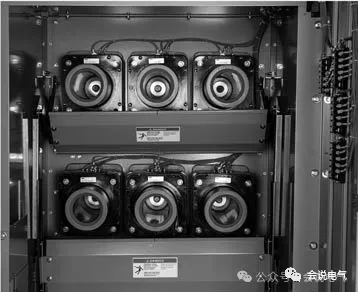
There are also current transformers that are not mounted on the contact box, but they are also installed on the busbar using a through type current transformer. Both the upper and lower ends of the circuit breaker need to be installed, generally one winding per transformer. This is necessary for differential protection design in North American systems and is convenient for replacement and maintenance.
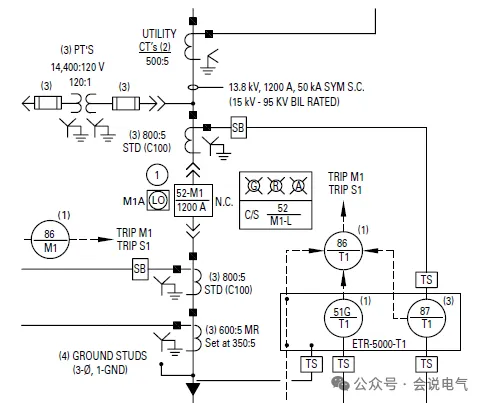
The American standard switchgear adopts a dedicated electrical and grounding handcart as a means of checking whether the circuit is live and for safe grounding of the circuit, therefore no grounding switch is used. And the 61 cabinets are usually equipped with grounding switches.
All charged bodies are enclosed in grounded metal compartments, automatic valves, main circuit bus conductors, and connections are all insulated, and circuit breaker compartment doors can be used as relay mounting plates.
The handcart drive auxiliary contact TOC is a fixed auxiliary switch installed inside the compartment to provide position signals for the circuit breaker when it is in the working position. When the circuit breaker is not in the working position, the auxiliary switch is in the normally open position, and when the circuit breaker is in the working position, the auxiliary switch is in the closed position.
Mechanism driven auxiliary contact MOC, a fixed auxiliary switch installed inside the compartment, is used to provide position signals for the circuit breaker in the open and closed positions. MOC/NO: When the circuit breaker is in the open position, the auxiliary switch is in the normally open position, and MOC/NC: When the circuit breaker is in the closed position, the auxiliary switch is in the closed position.
TOC/MOC is different from the domestic 61 switchgear, which is installed on the circuit breaker, while North America requires installation on the switchgear compartment.
Mechanical Interlocking
Only when the secondary circuit is disconnected can the voltage transformer fuse be approached or isolated
The following is something that our conventional circuit breakers do not have. Maintain the risk of accidental contact between operators and the release of energy from the spring energy storage mechanism
a) When the circuit breaker mechanism is storing energy, the interlock should prevent the circuit breaker from being safely withdrawn from the compartment;
b) When the circuit breaker is closed, the interlock should prevent the circuit breaker from being pulled out of the compartment
c) When the circuit breaker is pulled out, the operating mechanism automatically releases energy, and electrical interlocking should be provided to ensure that the circuit breaker will not automatically store energy again;
d) The energy storage state of the circuit breaker cannot be shaken into the working position.
Testing and Approval of American Standard Switchgear
The American standard switchgear needs to pass the following tests and be certified by North America. Taking 38kV 1200A 40kA as an example, the switchgear test items are as follows.
Recently Posted
-
Insulation issues of contact boxes for voltages of 24kV and above
September 8, 2026For medium voltage withdrawable circuit breaker switchgear, the contact box is a key insulation component. The main functions of t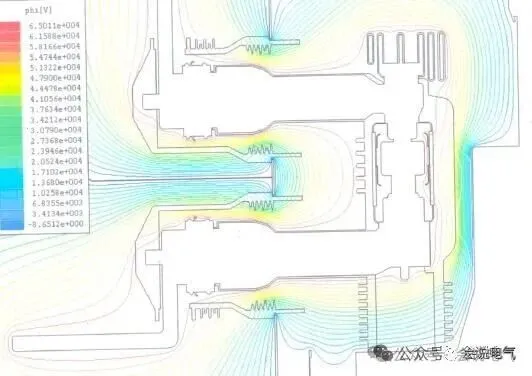 Read More
 -
Typical Primary Scheme and Layout of American Standard Low Voltage Switchgear
September 7, 2026The UL1558/IEEE C37.20.1 standard is the standard for American standard low-voltage power switchgear. As a primary distribution sw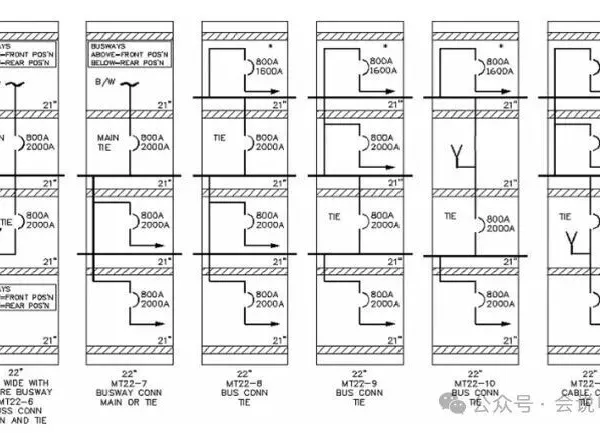 Read More
 -
Application of Low Voltage Switchgear Data Center Prefabricated Warehouse
September 7, 2026Prefabricated warehouses have become the preferred solution for applications such as data centers and new energy. High and low vol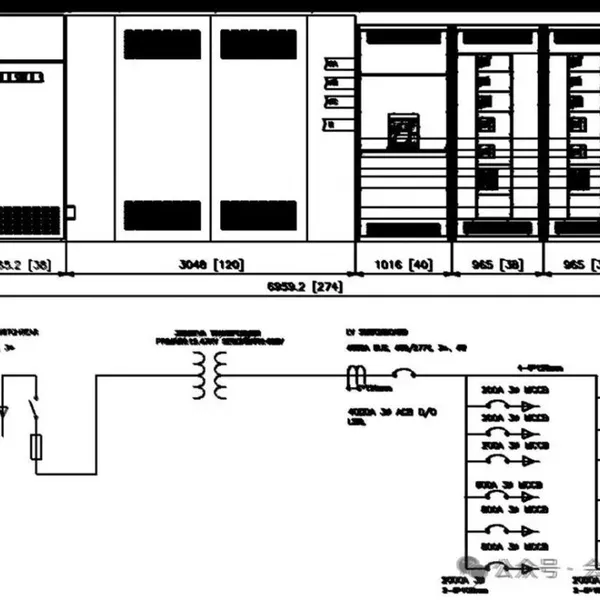 Read More
 -
The history of medium voltage switchgear
September 4, 2026Medium voltage circuit breakerIn 1895, GE developed the first oil circuit breaker, and in 1915, GE installed the first metal armor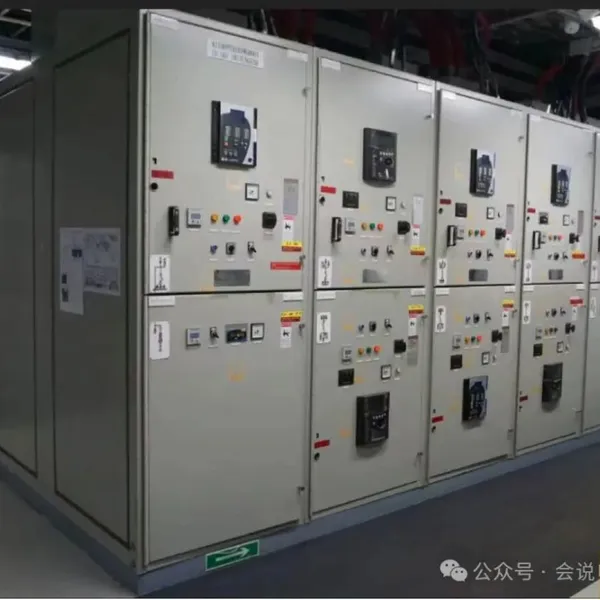 Read More

Contact Us
Recommended Products
-
 Single Phase Oil Immersed Transformer 10KVA 15KVA 25KVA 37.5KVA Standard CompliantNegotiableMOQ: 2 Units
 -
Electrical Arc Furnace Transformers up to 120MVA - Certified for Steel Industry ApplicationsUS$ 8000 - 10000MOQ: 1 Unit
-
3-Phase Oil Type Transformer 5-Year Warranty With Load Test ReportUS$ 5428 - 5628MOQ: 1 Unit
-
Three Phase Oil Filled Transformer for Mining Operations Dust-Proof DesignUS$ 5428 - 5628MOQ: 1 Unit
-
HV Three Phase Oil Filled Transformer With ONAN Cooling 500kVA-2500kVAUS$ 5428 - 5628MOQ: 1 Unit
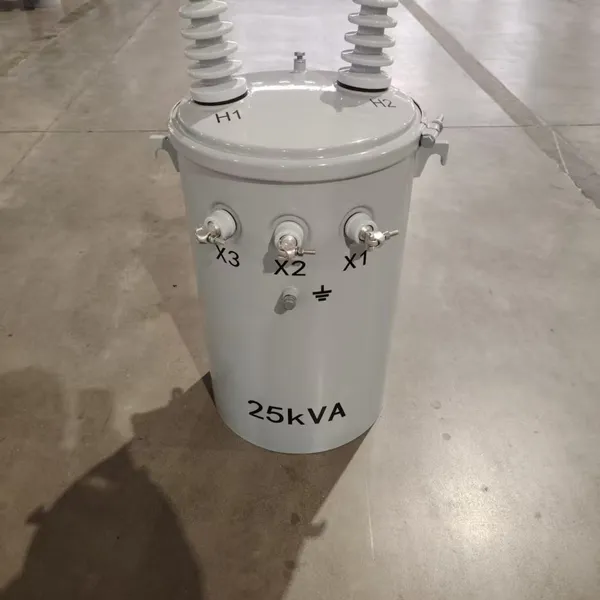
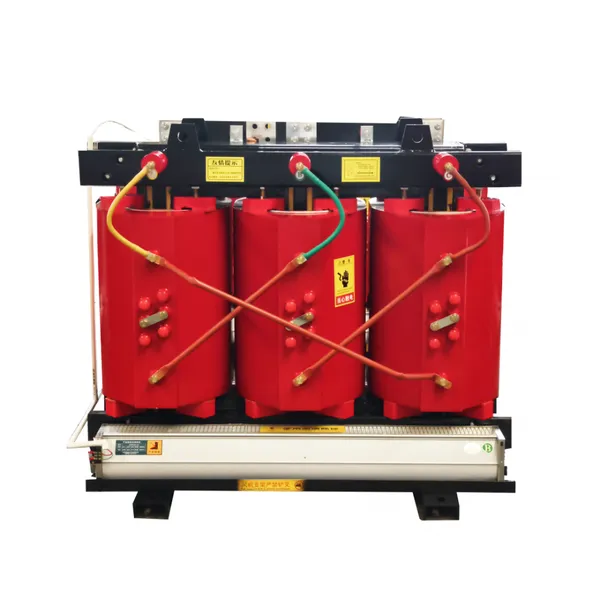
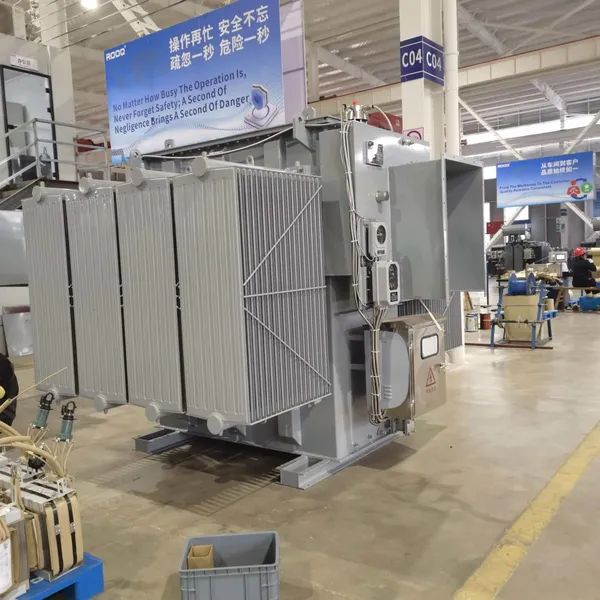
-
11/24/33KV High Voltage Isolation Switch With Mill Test ReportUS$ 800MOQ: 1 Unit
-
3-Pole Outdoor Isolation Switch With 5-Year Warranty and Compliance TestingUS$ 800MOQ: 1 Unit
-
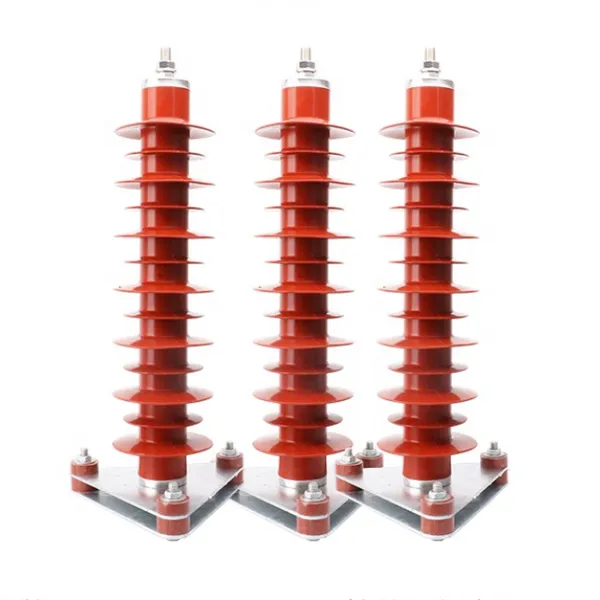
YH5WZ 3KV-110KV Zinc Oxide Arrester for Power Station Outdoor High Voltage DistributionUS$ 21MOQ: 100 Units
-
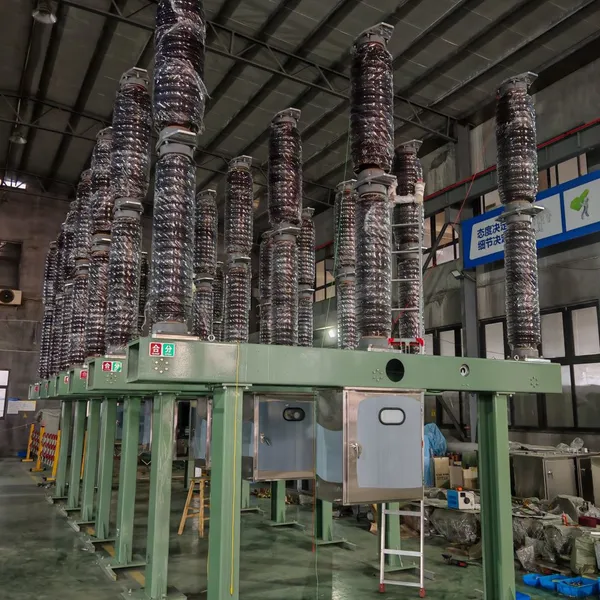
Outdoor SF6 Load Break Switch LW30-72.5/1250A 24KV 630A 16KA Three PhaseUS$ 10000MOQ: 1 Unit
-
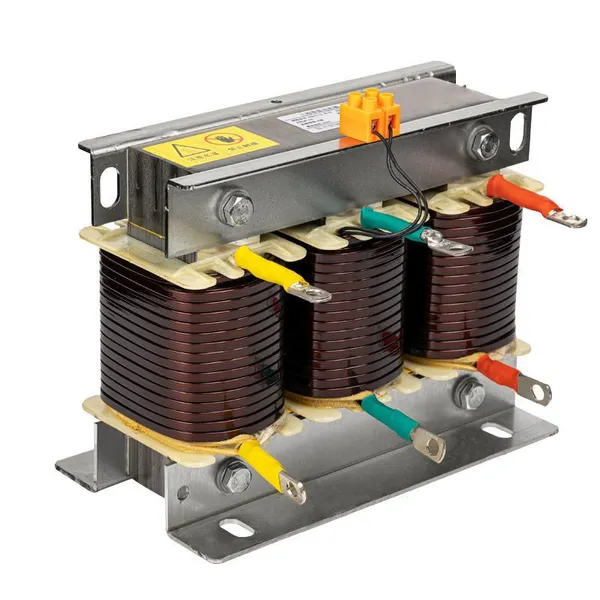
Input Line Reactor for CNC Machine Frequency Converters, 400V 60HzUS$ 65MOQ: 5 Units
-
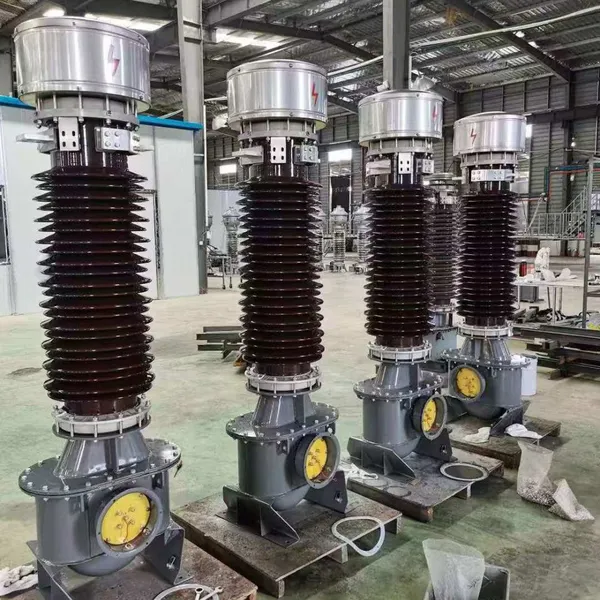
Industrial Grade 35-220KV Oil-Immersed Current Transformer for SubstationsUS$ 480 - 500MOQ: 3 Units
-
LZZBJ9-20 Indoor 24kV High Voltage Cabinet Single-Phase 5-20 for Industrial Power SystemsUS$ 250MOQ: 3 Units
-
17.5 KV Full-enclosed Outdoor Epoxy Resin Casting and Double Pole Insulated Voltage TransformerUS$ 90 - 100MOQ: 1 Piece
-
Three Phase 30kVA SVC Voltage Regulator for Textile Manufacturing, Stable OutputUS$ 159MOQ: 10 Units
-
Amorphous Core 25kVA Transformer Compliant With IEC Standards for Power DistributionUS$ 1300 - 2900MOQ: 2 Units
-
CHINT NM8NDC-630 DC 1000V/Ui High-Voltage Circuit Breaker With 630A Frame CurrentUS$ 425 - 625MOQ: 100 Units
-
High Voltage Drop Out Fuse Cutout 33KV 27KV 24KV for Overhead LinesUS$ 35MOQ: 100 Units
-
TVR-10 KVA Automatic Voltage Stabilizer 220V ±0.5% Accuracy for Laboratory InstrumentsUS$ 103 - 123MOQ: 1 Unit
-
Universal 5000VA Voltage Transformer for International Appliances 110V-220VUS$ 102 - 107MOQ: 10 Units
-
500kV Three-Phase Oil-Immersed Auto Transformer 250MVA for Power GridsUS$ 800 - 9000MOQ: 1 Unit